√ Neutral Packaging √ Quality Assurance


How the World Trains Women to Blame Themselves (And How to Stop)
Products you might be interested in






The first time I heard it, I was 16. A girl in my class got catcalled on the way home from school—some guy in a van hissed “Nice legs, sweetheart” as she walked past. When she told us, half the boys in the room smirked. “Well, what did she expect? She was wearing those tiny shorts.”
And just like that, the air got thicker. Because we all knew—she hadn’t expected it. She’d just wanted to not sweat to death in July.
But the damage was done. The message was clear: Her body wasn’t hers. It was public property. And if something happened to it? Well. She should’ve known better.
The Theft: How Victim-Blaming Robs Women of Their Own Skin
1. “Your Clothes Are an Invitation” (Spoiler: They’re Not)
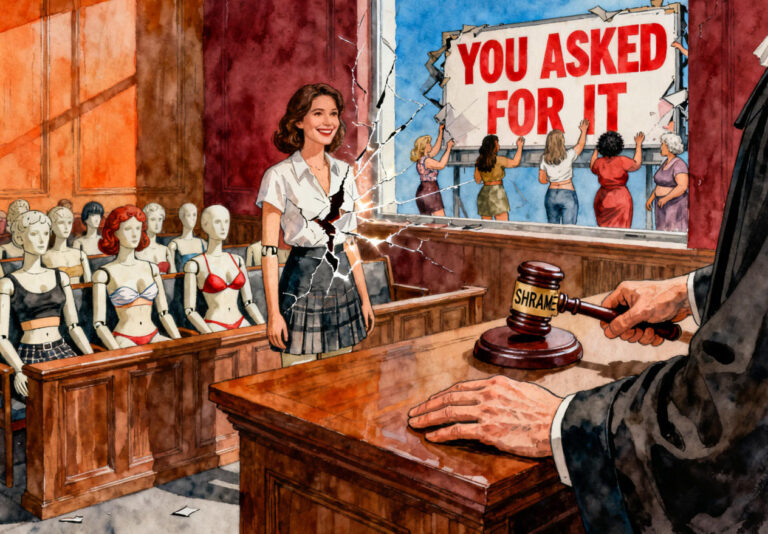
They’ll say it in courtrooms, in comment sections, in your own family’s WhatsApp group: “She was asking for it.” As if a tank top is a signed contract. As if a short skirt is a neon “VIOLATE ME” sign blinking over her head.
Here’s the thing—clothes are fabric. They’re not consent. They’re not a magic spell that turns men into mindless beasts. (And if they were? Maybe we should be asking why we’ve built a world where half the population is supposedly one miniskirt away from losing control.)
Researchers call this “the eroticization of blame.” Fancy term for a ugly truth: When we say “She dressed like that,” we’re not talking about fabric. We’re saying her body exists to be policed. That her safety is her responsibility—but her pleasure? Her comfort? Her existence? Those are negotiable.
Bell hooks put it best: “The body is the terrain where dominance is most visibly acted out.” And victim-blaming? That’s the map they use to carve it up.
2. The Myth of the “Uncontrollable Man” (And Why It’s Bullshit)
Ever notice how the same people who call women “teases” for wearing crop tops also insist men are “just wired that way”? Like some primal, testosterone-fueled volcano ready to erupt at the sight of a collarbone.
Newsflash: Men are not dogs. They’re not wild animals. They’re people—with brains, with self-control, with the same damn capacity for basic decency as anyone else. The “boys will be boys” excuse isn’t biology. It’s laziness. A get-out-of-jail-free card for a culture that’s never bothered to teach men that “no” means “no,” not “try harder.”
And here’s the kicker: This myth doesn’t just hurt women. It traps men, too. Because if you’re raised to believe your desires are unstoppable, what happens when you do stop yourself? When you don’t act on every impulse? Suddenly, you’re “not a real man.” That’s not freedom. That’s a cage.
3. The Courtroom as a Second Crime Scene
Imagine being raped. Now imagine sitting in a courtroom while a lawyer holds up your underwear and asks the jury “Does this look like the panties of a woman who didn’t want it?”
This isn’t a hypothetical. It’s happened. And it keeps happening—because victim-blaming doesn’t just live in locker-room talk. It’s baked into the system.
- Reporting drops. Why bother, when you know you’ll be the one on trial?
- Convictions plummet. Because if she was drunk, or flirty, or existing, maybe she “led him on.”
- Rapists walk. And why wouldn’t they? When the world’s busy asking “What was she wearing?” instead of “Why did he rape her?”
Judith Herman calls this “the second assault.” The first is the violence itself. The second? The world telling you it was your fault.
4. The Silence That Follows
Here’s what they don’t tell you about shame: It’s sticky. It clings to your skin, seeps into your bones. And when the world whispers “You brought this on yourself,” it’s not just the assault that haunts you. It’s the loneliness.
Because suddenly, you’re not just a victim. You’re a “slut.” A “liar.” A “regret.” And who’s going to believe you over the nice guy with the promising future?
So you shut up. You swallow it. And the cycle spins on.
The Fight Back: How to Steal Your Body Back
1. Unlearn the Lies (Starting with Your Own Brain)
The first battle isn’t out there. It’s in your head. Because victim-blaming doesn’t just come from trolls online—it’s the little voice that asks “Was my skirt too short?” after a grope. The one that wonders “Did I smile too much?” after a harassment.
Here’s your mantra: My body is not an apology. My body is not an invitation. My body is MINE.
Repeat it. Tattoo it on your ribs. Scream it at the mirror. Because the second you start believing your existence isn’t conditional? That’s when the real fight begins.
2. Talk. Loudly. Even When They Tell You to Shut Up.
Silence is victim-blaming’s best friend. So break it.
- Call it out. When your uncle jokes “She was asking for it,” say “No, he was.” When your friend sighs “Well, she was drunk,” hit back with “So? Drunk people don’t deserve to be raped.”
- Share your story. If you’re safe to do so. Because every time a woman says “This happened to me,” she’s chipping away at the lie that it’s “just a few bad apples.”
- Amplify others. Retweet. Repost. Believe survivors—especially when it’s inconvenient.
Eve Ensler wrote “The Vagina Monologues” because she was tired of women being ashamed of their bodies. We should all be that tired.
3. Demand Better (From Laws, Schools, Men—Everyone)
Victim-blaming isn’t a personal failing. It’s a system. And systems? Those we can burn down.
- Education: Fight for schools that teach consent, not just “don’t get pregnant.”
- Media: Boycott outlets that call rapists “promising young men” and victims “temptresses.”
- Men: The best allies don’t just “believe women.” They call out their buddies. They sit with their discomfort. They do the damn work.
And laws? Affirmative consent isn’t just a buzzword. It’s a revolution. Because “no means no” is the bare minimum. “Only yes means yes”? That’s how we start fixing this mess.
4. Reclaim the Joy (Because Fuck Them, You Deserve It)
Here’s the thing they don’t want you to know: Victim-blaming isn’t just about control. It’s about stealing your joy.
They want you to second-guess every outfit. To flinch at every glance. To shrink yourself so you don’t “provoke” anyone.
Don’t.
Wear the short skirt. Dance like no one’s watching (especially not the guys who think they own the place). Take up space. Be unapologetic.
Because the best revenge isn’t just surviving. It’s thriving. It’s looking the world dead in the eye and saying:
“You wanted me to be ashamed? Watch me shine instead.”
Share to:
- Share on X (Opens in new window) X
- Share on Facebook (Opens in new window) Facebook
- Share on Reddit (Opens in new window) Reddit
- Share on Threads (Opens in new window) Threads
- Share on LinkedIn (Opens in new window) LinkedIn
- Share on Pinterest (Opens in new window) Pinterest
- Share on Telegram (Opens in new window) Telegram
- Share on WhatsApp (Opens in new window) WhatsApp
Related
By using this website you agree to our Privacy Policy.